
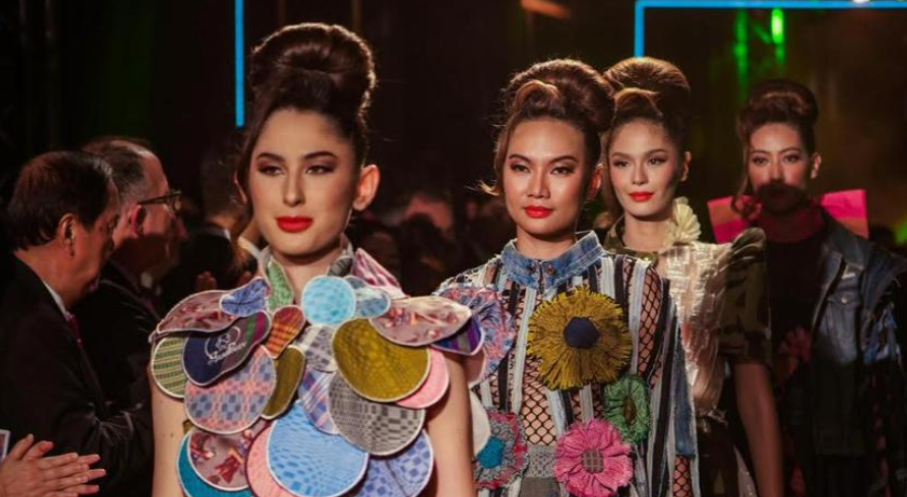
After several quiet years and sporadic digital attempts, Philippine Fashion Week made its long-anticipated return this March–April, and it came back with purpose stitched into every seam. Held at the SMX Convention Center and streamed on TikTok Live, this season’s relaunch was about rebuilding an industry with deep Filipino roots and giving it the tools to rise higher than ever.
The event took place at SMX Convention Center in Pasay, while livestreams ran across TikTok, YouTube, and fashion platforms. There were moments of excitement, some awkward pauses between segments, and a steady stream of reactions online. People watched shows from their phones, screens split between the runway and shopping links.
There was a clear push toward integration. Designers brought collections to the stage while apps offered the same pieces for immediate purchase. The rhythm felt fast, maybe faster than some expected.
One of the standout presentations came from RJ Santos, who worked with elderly tailors from Bulacan to create a line called “Barong Para sa Bayan.” Each piece held something personal. Embroidery reflected years of practiced craft. QR tags attached to the fabric led buyers to the story behind the stitcher. Viewers leaned in, figuratively and literally, scanning and reading quietly before the next model stepped forward.
Rajo Laurel’s “Balik-Tela” collection highlighted another layer of thought. Garments were made using unused fabric from past designs. There were patchworks and repurposed textiles, put together in ways that felt modern without hiding their origin. The pieces went live through Zalora shortly after the show. They moved quickly. Some said it was the design. Others said people wanted to support the reuse movement.
Throughout the week, smaller booths stood near the main venue. “Threads of Hope,” an initiative supported by the DTI, brought Marikina shoemakers, Visayan weavers, and student creators into the fold. The setup felt simple. Flyers were handed out without fanfare. Some stands had small product displays beside printouts explaining their stories. There was nothing polished about it, but people paid attention.
There were learning spaces too. A panel titled “Sew to Scale” introduced digital tools for tailoring and pattern design. Participants leaned forward, took notes, asked questions. The technology looked promising. Whether it reaches small tailoring shops soon remains uncertain. Progress often moves in steps, not in leaps.
Fashion Week shifted between tradition and experimentation. Some garments looked handwoven, others sleek and futuristic. One designer used glass beads from Mindanao, another used discarded denim sourced from community drives. The range felt wide, sometimes slightly uneven. But that made the effort feel real.
The return of this event pointed to something deeper than seasonal trends. Fashion is an art, but also a form of livelihood. Many designers and makers worked through long pauses and quiet months to get to this stage.
Philippine Fashion Week came back with new ideas, familiar hands, and an industry still growing into its next form. Not every collection aimed for perfection. Some moments stretched too long. Others passed too quickly. But all of it held weight.
In the end, it felt like something was beginning again.
 jourknows.org