
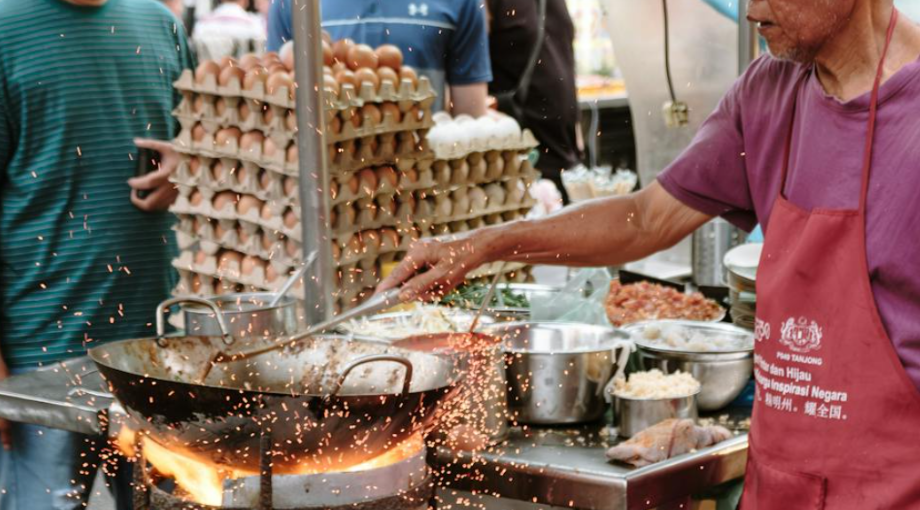
April evenings came with a different kind of craving. Somewhere between late-day traffic and early dinner plans, people started lining up at compact parks filled with fairy lights, chalkboard menus, and the scent of garlic butter and smoke.
In Quezon City’s Maginhawa district, a small cluster called Park & Picháy quietly opened early this month. Within days, it turned into an after-work magnet. By the second weekend, tables were full before sunset.
At the center of it: truffle taho. Silken tofu topped with dark syrup, but this time infused with truffle oil and topped with crushed cashew brittle. Some swore it worked. Others looked unsure after the first bite but finished the cup anyway.
Next stall over, a sign read “Isaw Redux” in hand-drawn serif lettering. The skewers came charred, glossy, and arranged like small sculptures. Diners chose from dipping sauces labeled “garlic aioli,” “calamansi glaze,” and “black vinegar reduction.” The classic pairing with sawsawan stayed; just translated into something plated.
Another spot called Gulong-Gourmet offered elevated fishball platters: homemade fish cakes with curry-infused dips, sriracha foam, and three kinds of vinegar. It looked too pretty to be from a pushcart, but still familiar enough to remind you of your old after-school stop.
These parks did not try to erase the street food experience. Instead, they folded it into something a bit more curated. Some vendors still used portable grills and makeshift signs. Others had refurbished kombi vans as stalls, complete with vinyl decals and tiny potted plants near the cashier.
There were moments of quiet observation; people squinting at menus, trying to pronounce “confit kwek-kwek.” A few laughed mid-bite when the taste felt exactly like what they expected, just with a fancier name.
The crowd skewed young. Mostly students, creative professionals, a few families lingering after errands. People stayed longer than they needed to. Tables became spaces to talk, scroll, and share bites across plates.
By mid-April, similar parks appeared in parts of Makati, BGC, and even Antipolo. No official movement, but something about the timing suggested an itch to reimagine something deeply local.
Some purists called it unnecessary. Street food, by nature, is already good. Already loved. But for others, this version was not about improving what came before. It was about trying something new without letting go of the old.
In a way, this trend is still finding its footing. Some dishes felt slightly overdone. A few combinations leaned more curious than delicious. But even then, the energy stayed warm.
There was something comforting about watching people gather around familiar flavors, even when served in cardboard boats or ceramic bowls.
This April, street food moved. A little more dressed up. But still very much at home.
 jourknows.org