
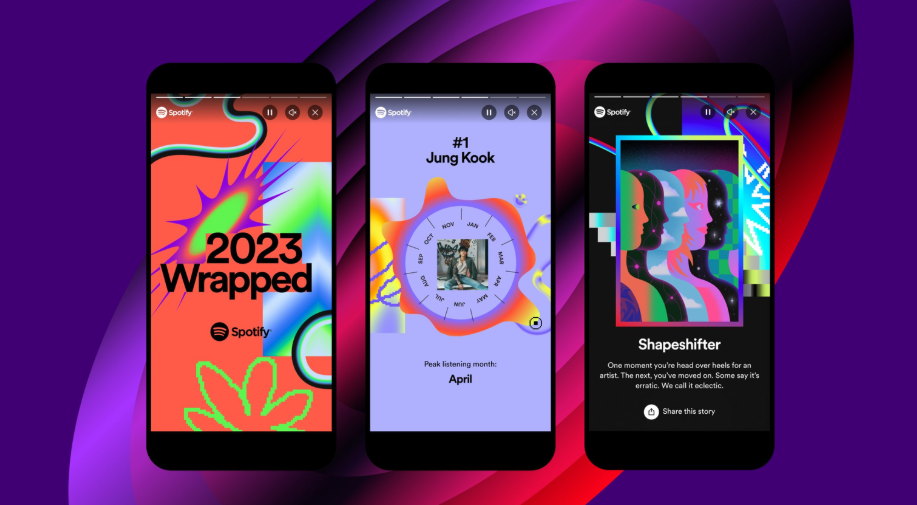
Every December, users scroll through Spotify Wrapped; playlists, stats, top artists, track counts. Hopeful. Nostalgic. But for Gen Z and younger millennials, their real summer soundtrack isn’t in those numbers. It lives in moments like midnight Zoom breakdowns, late-night comedowns, or the silent damnation of anxiety.
Music isn’t background noise anymore. It scores survival.
More than 68 percent said they couldn’t live without music, and two-thirds of their audio time goes to music streaming. It’s lifeline behavior. In the UK, Gen Z spends 39 percent more on music than average listeners, on merch, concerts, vinyl, because it matters.
Mental-health research confirms what many feel: cortisol levels drop up to 41 percent when listening to music, with blood pressure dipping 5–10 mmHg, while anxiety symptoms may fall by nearly half with therapy (gitnux.org). That’s science. That’s measurable.
But what does this sound like?
Take Taylor Swift. For many, her songs are heartbreak healers. The melancholy of “All Too Well” is a wake-up call. That feeling is emotional release. It’s permission to cry, and cry loud.
Then Laufey, the Icelandic-Chinese jazz-pop artist. Her voice is fragile, nostalgic, almost lullaby-like. For someone ending a relationship, her voice cuts deeper than words, oddly soothing in its honesty.
Across Spotify, amateur mixtapes, concert recordings and karaoke vibes, people craft playlists for studying, decompressing, unwinding; 82 percent of Filipino Gen Z say they feel more centered and happier after their daily music (rappler.com).
Even Taylor Swift’s recent concerts became emotional reset points. Like real therapy without the co-pay. When Taylor sings “Long Live,” fans say it’s more than a line. It’s a rally cry.
Artists today are writing for emotional realism. Mantione, a songwriter featured in Forbes, says music gave him a framework to name pain and rebuild after crisis. A single song can become a tool in your pocket all day (forbes.com).
It’s identity work. 63 percent of young people said creative expression boosts confidence, and 61 percent said it eases anxiety (globalwellnessinstitute.org). Making, sharing, streaming music is creative therapy even if it’s just curating a playlist.
Concerts reinforce it. Researchers call it emotional regulation through music and communal crying. A Wired-style piece said Gen Z treats concerts like therapy sessions (wokewaves.com).
So this summer, skip the Wrapped nostalgia. Think: Taylor’s lyrics at midnight, SB19 echoing through earbuds, BTS healing in K-pop, Laufey’s jazz lullabies navigating heartbreak. Music is pulse. Music is mirror. Music is medicine.
Your Wrapped might tell you how many songs you played. It will not tell you what those songs did for you. It cannot track cortisol. It cannot log tears. It cannot measure relief. It can show your emotional survival, but not what saved you.
In a world running on stress and uncertainty, that silence between beats? It has meaning.
 jourknows.org