
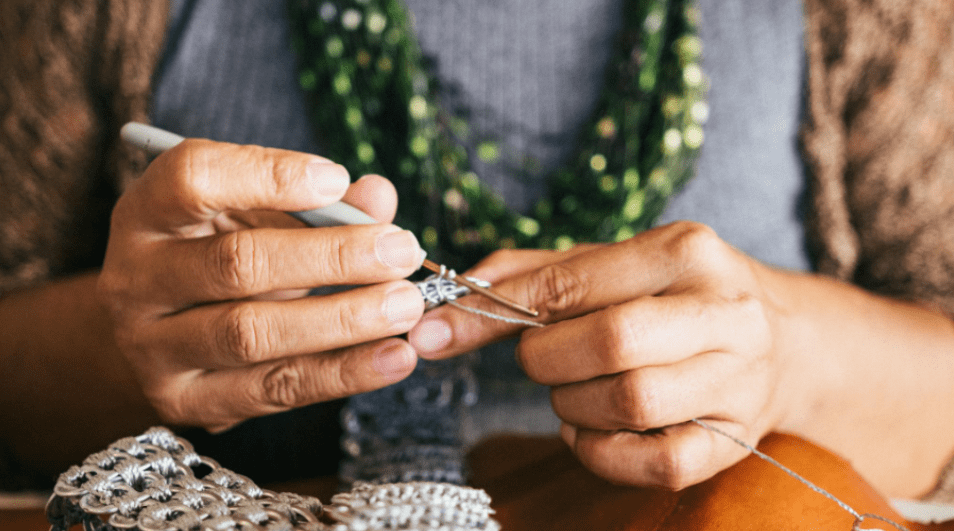
The projects are small. A scarf that isn’t quite straight. A film roll developed a month late. A bullet journal that’s messy but full. None of it feels loud or showy. But it helps.
More young people are turning toward creative routines. Just to feel like themselves again. Giving yourself permission to make something, even something small, can change everything.
Why Start Something Creative?
You might feel scattered, or bored, or overstimulated. You might crave movement, but slow and quiet.
This is where creative hobbies step in. They give your hands something to do when your mind needs space. They offer shape to your days. You begin something and see it through, even if the outcome feels imperfect.
For many people, that simple start-and-finish rhythm brings more peace than they expected.
Where You Can Begin
You don’t need a dramatic lifestyle shift. A few small steps are enough:
1. Pick a low-pressure medium
Choose something that invites exploration. Try:
- Crochet — Start with a basic granny square. Repetition helps the brain settle.
- Journaling — Skip the rules. Write one sentence a day, or paste in scraps you like.
- Film photography — Disposable cameras work well. Wait for the photos, reflect when they arrive.
- Zine-making — Fold a sheet of paper into eight pages. Fill it with lists, doodles, copied poems. Keep it or share it.
- Bullet journaling — Use it for to-do lists or small habits. Make it colorful if that helps you stay with it.
None of these need skill. Only curiosity.
2. Create time for it
You don’t need full weekends. Even ten minutes at the end of the day can create space. Keep your materials where you can reach them easily; on your desk, in your bag, next to your charger.
When a creative hobby feels accessible, you’re more likely to return to it.
3. Let it be imperfect
Smudged ink, uneven stitches, blurry photos, all of these carry proof that you showed up. No corrections needed. The goal is connection.
What People Are Getting From It
- Structure — A way to begin and end the day
- Calm — A break from screens, noise, and constant input
- Joy — A moment where you’re not fixing anything, just making
- Meaning — A record of what you felt, even if you never explain it
Over time, these routines begin to hold you. They become steady, personal, yours.
You Can Try, Without a Plan
Start with the motion; cutting, stitching, coloring, arranging, and let the outcome come later.
Some days, you might only sharpen your pencils and not draw. That still counts. Other days, you may write a single sentence that feels true. That’s enough.
There’s no need to explain why you’re doing it. The fact that you want to is reason enough.
Making things can remind you who you are when the day feels blurry. It can offer quiet when everything feels too fast.
In a time when so much is uncertain, that kind of stillness is worth keeping.
 jourknows.org