
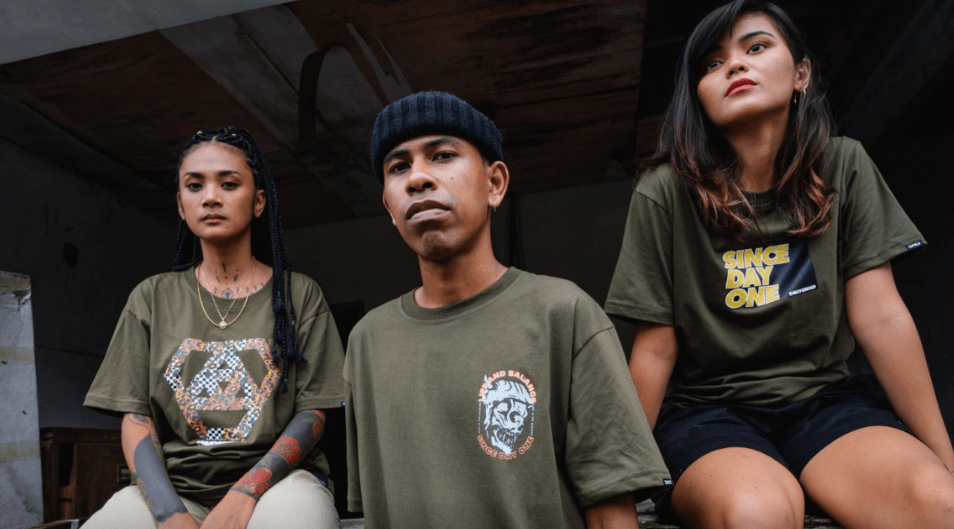
There’s something different happening on the streets lately. Cargo pants that pool around the ankles. Worn-out sandos layered under techwear jackets. Fisherman’s hats paired with luxury sneakers. Brands, local ones, printed proudly across backs and caps, no longer playing second to foreign names.
Filipino streetwear is evolving. Not outward, but inward.
Young Filipinos are dressing in ways that feel more instinctive than aspirational. More personal than polished. And in that shift, a new kind of fashion identity is taking form; one that reflects where they’re from, not where they’re trying to go.
At the center of this shift are rising local brands like DBTK, Nobody, Syndrome Supply, and Transit. They speak the language of their wearers; Tagalog phrases stitched onto hoodies, color palettes that feel pulled from city walls, textures that recall both sidewalks and sari-sari stores. These labels don’t sell luxury. They sell familiarity. But reframed as style.
Then there’s “fisherman-core,” a term that started half-serious but stuck. Loose tank tops, short shorts, drawstring pants, slippers. A look born from practicality that has quietly become a new aesthetic. It doesn’t perform. It doesn’t ask to be photographed. It just exists, and that might be why it’s catching on.
Beside it, another layer reveals itself; Y2K nostalgia. But this isn’t the hyper-glossy, LA-influenced Y2K seen on global runways. This one’s rooted in Filipino childhoods. Anime bootlegs, embroidered low-rise jeans from Greenhills, jelly sandals, denim with way too much stitching. It’s messy and a little chaotic. Deliberately unpolished. It remembers what local fashion actually looked like when it wasn’t curated for likes.
This current moment in Filipino streetwear doesn’t revolve around global trends anymore. There’s still influence, of course, there always is, but the reinterpretation feels different. The goal isn’t to look Western. It’s to feel understood.
Thrift culture plays a role, too. Young people dig through ukay racks not just for bargains, but for pieces that hold some kind of memory. A faded tee with an old political logo. A windbreaker that smells faintly of someone else’s life. These are worn without irony. They’re part of the outfit. Part of the story.
There’s still a lot of variety. Some gravitate toward polished monochrome, others toward maximalist layering. But the throughline is this sense of autonomy. Of choosing how to be seen, rather than waiting to be styled by someone else’s standard.
Fashion in the Philippines is shifting because young Filipinos are leaning more towards self-definition now. They don’t need their clothes to speak louder than they do. But if someone notices, that’s fine too.
 jourknows.org